

Blog
Borosilicate Glass vs Crystal Glass: 7 Proven Wholesale Buyer Notes | QZCRAFTS

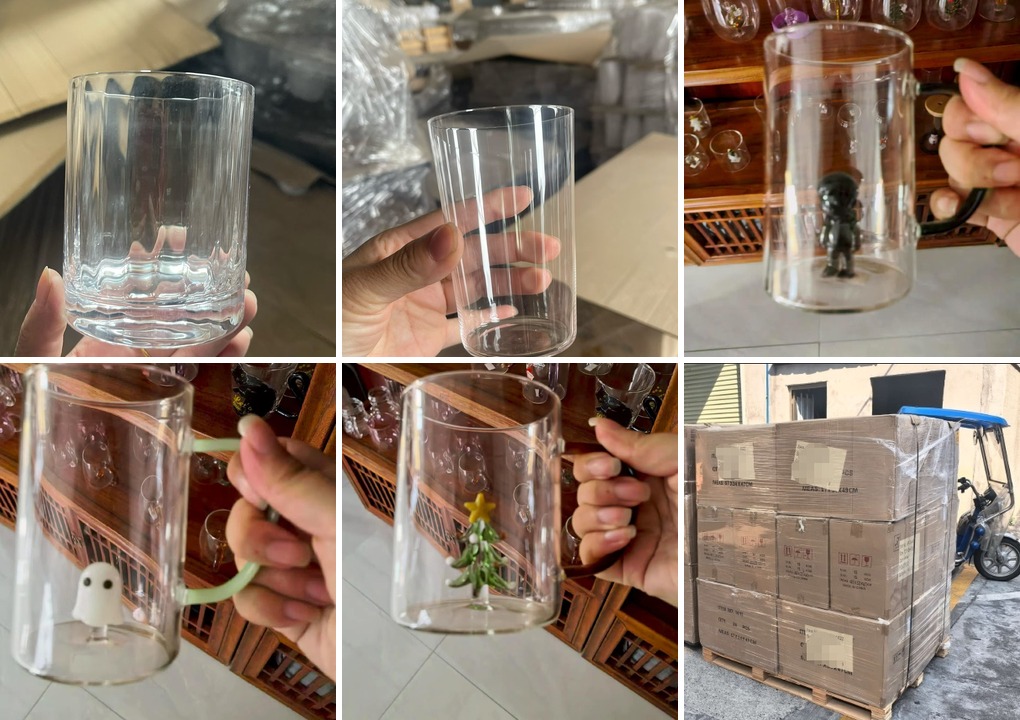
Borosilicate glass and crystal glass are the two materials behind most drinkware orders that leave our factory each month — one picked for thermal shock resistance and everyday service, the other for clarity, weight and a premium feel in the hand. This report follows six photos from one shipment week: two crystal glass tumblers held up in front of the sample shelf, three borosilicate glass mugs with fused figures inside the body, and the shrink-wrapped pallet every one of them left on.
Both materials run through the same forming, annealing, decoration and inspection days, and both pack into the same export cartons. What changes is the buyer at the other end: a bar chain ordering borosilicate glass mugs for hot service, a gift brand ordering crystal glass tumblers for a boxed set, or a wholesaler mixing the two on one purchase order. Here is what the floor and the packing yard actually showed this week, and what it tells you before you quote.
Borosilicate Glass vs Crystal Glass: Where Each One Sells
- Bars, cafés and hotels — borosilicate glass mugs and tumblers that take hot drinks and quick wash cycles without complaining.
- Gift and seasonal programmes — crystal glass tumblers and boxed sets where clarity and hand weight carry the price point.
- Retail and e-commerce — novelty shapes with fused figures inside, sold by the piece and packed one per color box.
- Wholesalers and importers — both materials consolidated on one PO, mixed pallets, one container booking.
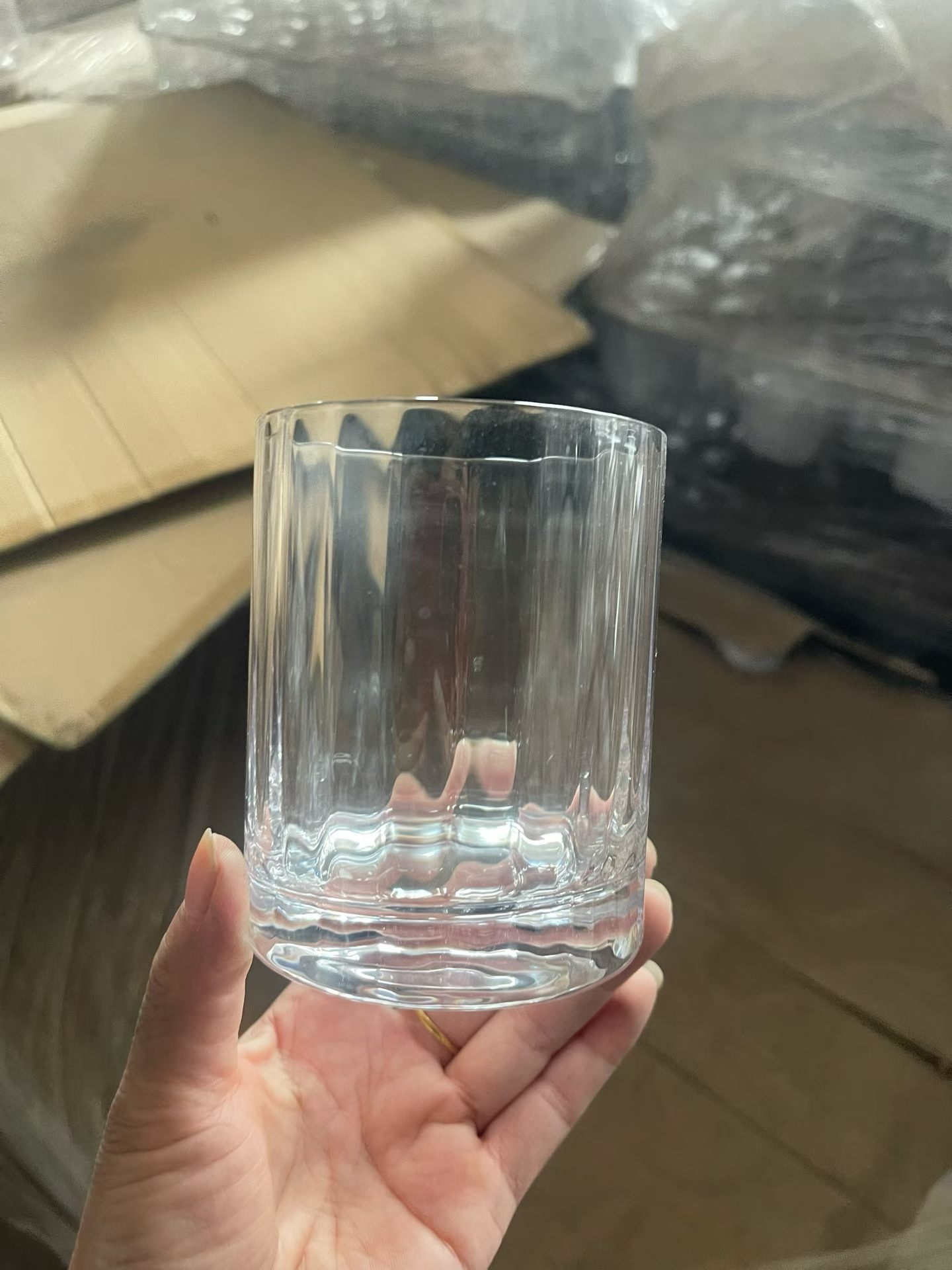
The ribbed crystal glass tumbler above is the kind of piece a retailer lists on its own: vertical relief for grip, a wavy base that catches shelf lighting, and walls thin enough to feel light without feeling fragile. Behind it sits the sample shelf, so a buyer comparing finishes can see the ribbed body next to smooth, printed and colored options in the same frame.
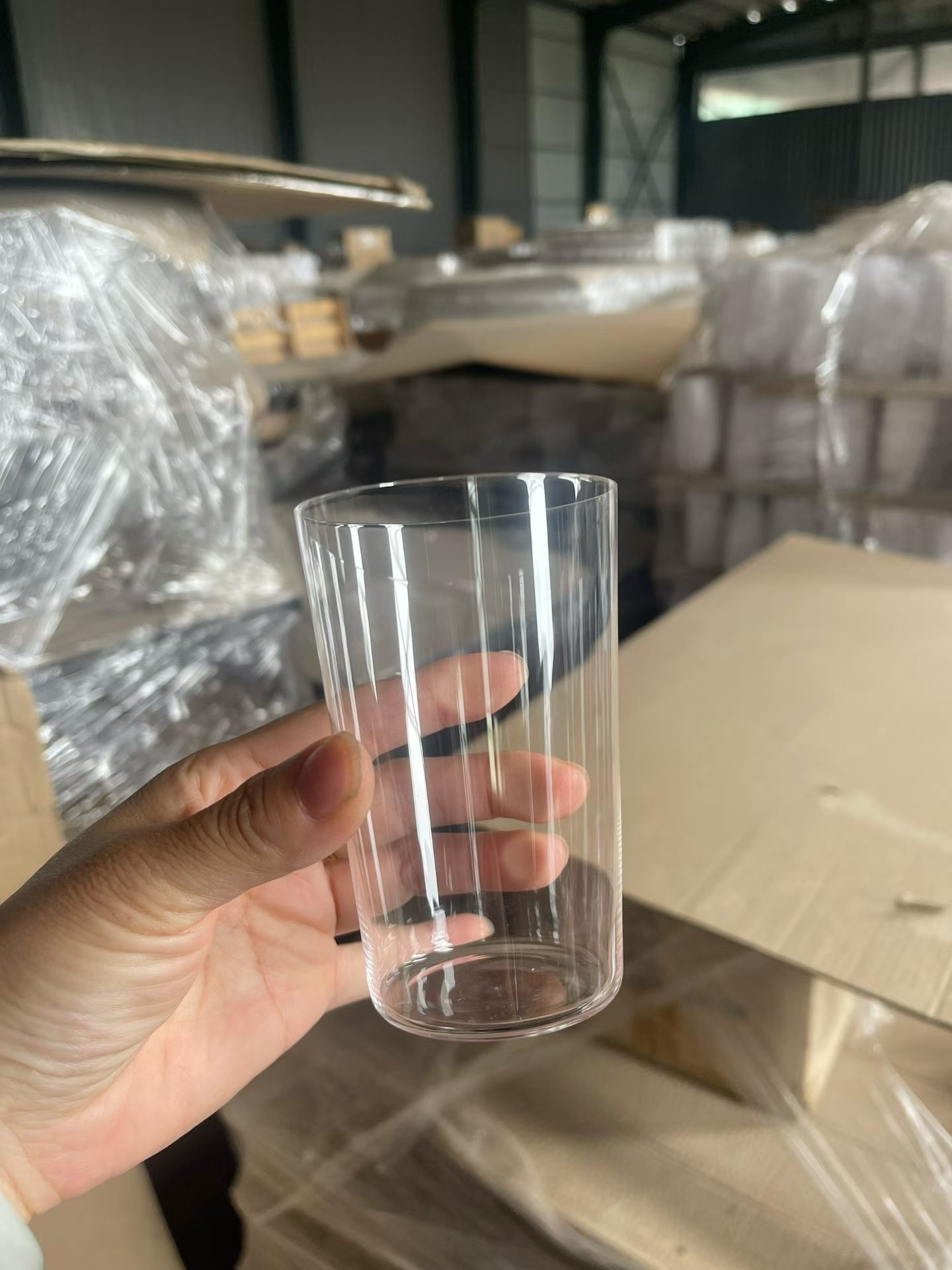
The slim crystal glass tumbler is photographed in the packing aisle on purpose — the stacks and shrink-wrapped bundles behind it are real inventory waiting to move. That is the practical difference between the two materials on a buying decision: crystal glass sells the shelf, borosilicate glass survives the service well, and a mixed order gets you both without a second supplier.
Two Materials in Six Photos
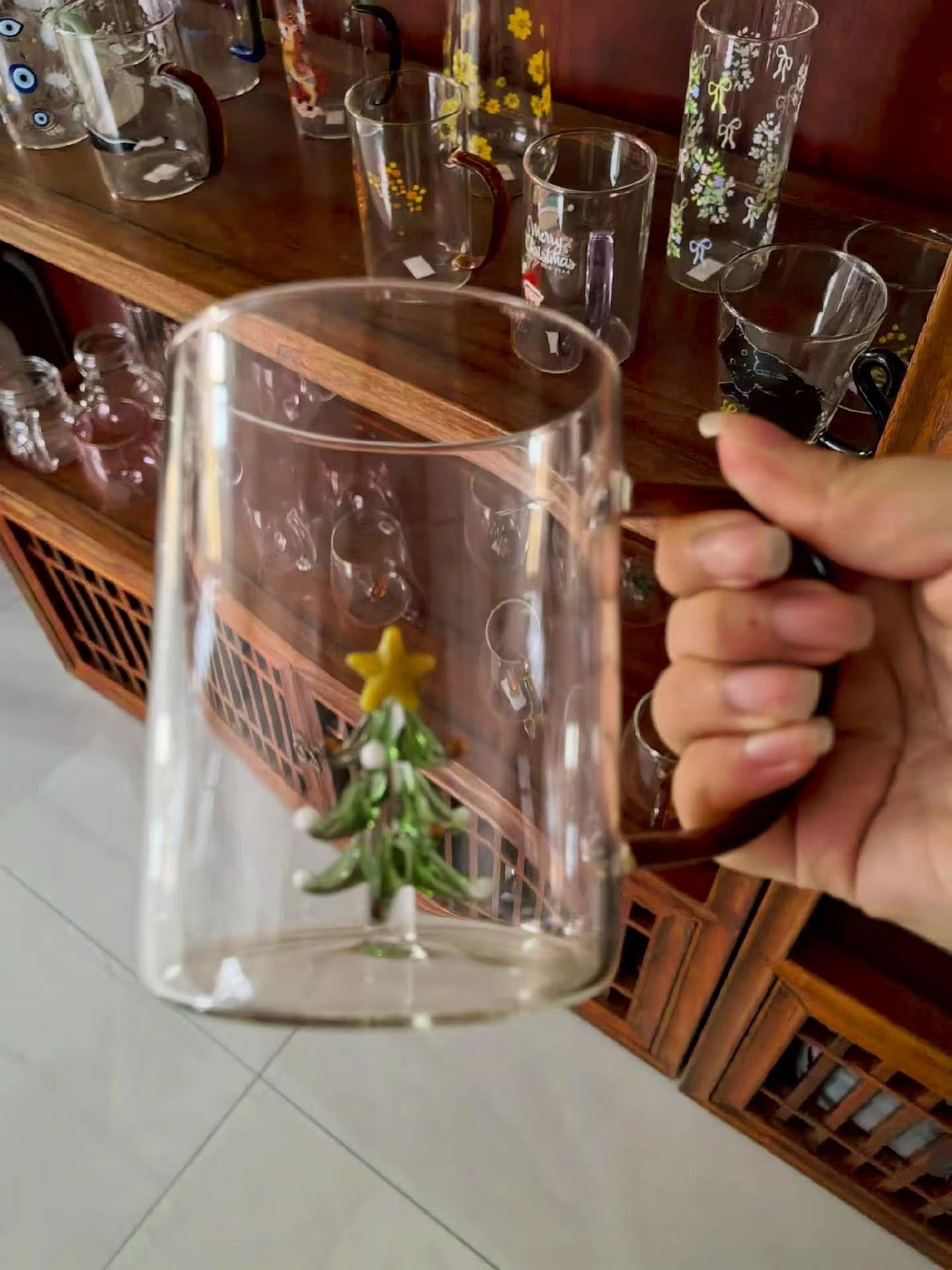
The three mugs in this batch are borosilicate glass with a figure fused inside the body: a stein with a dark character standing on the base, a ghost mug for the Halloween programme, and a Christmas tree mug where the tree and star are built into the glass rather than printed on it. Each one is held up by hand so the buyer can read the scale, the handle position and how clearly the figure shows through the wall.
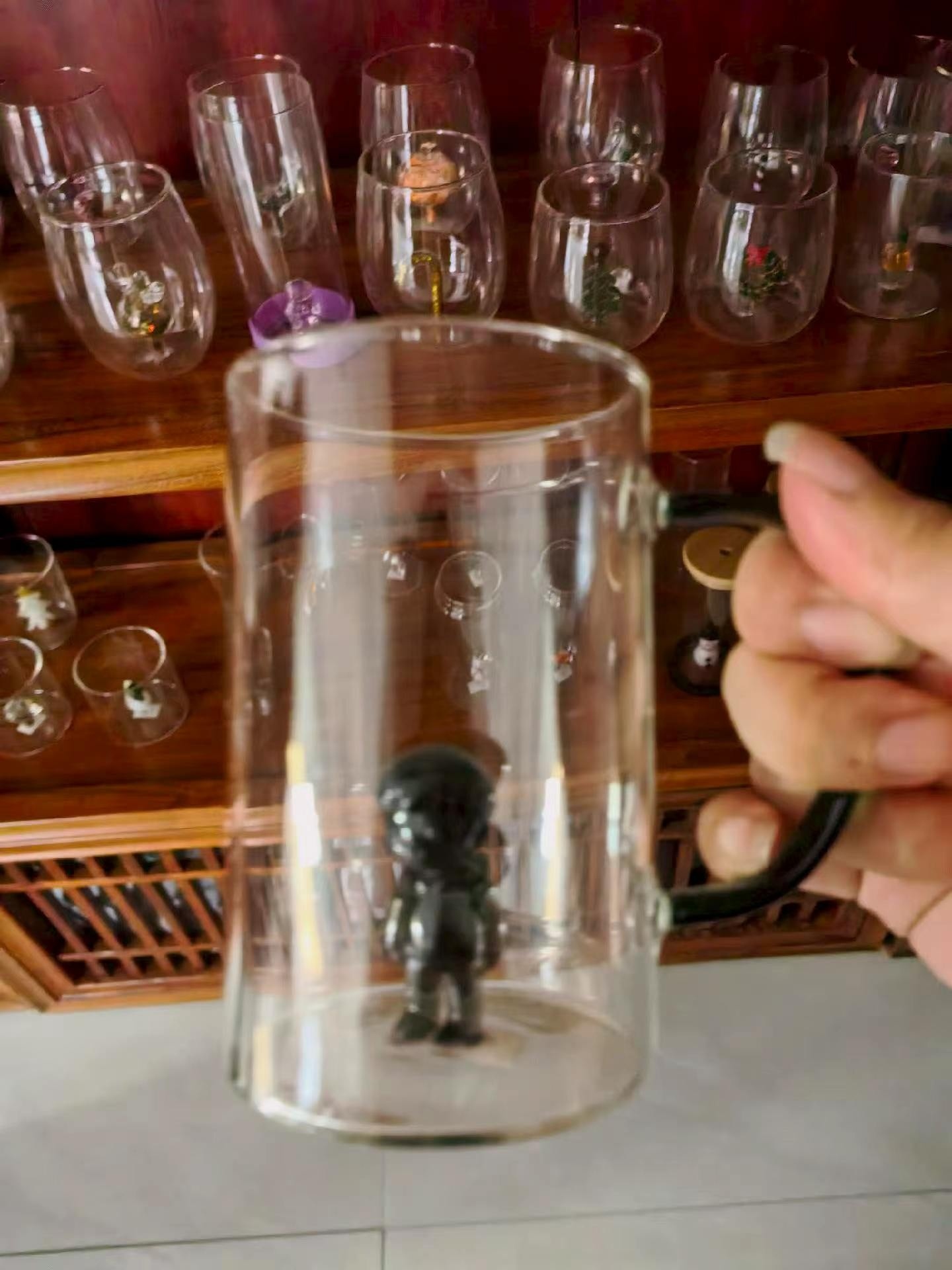
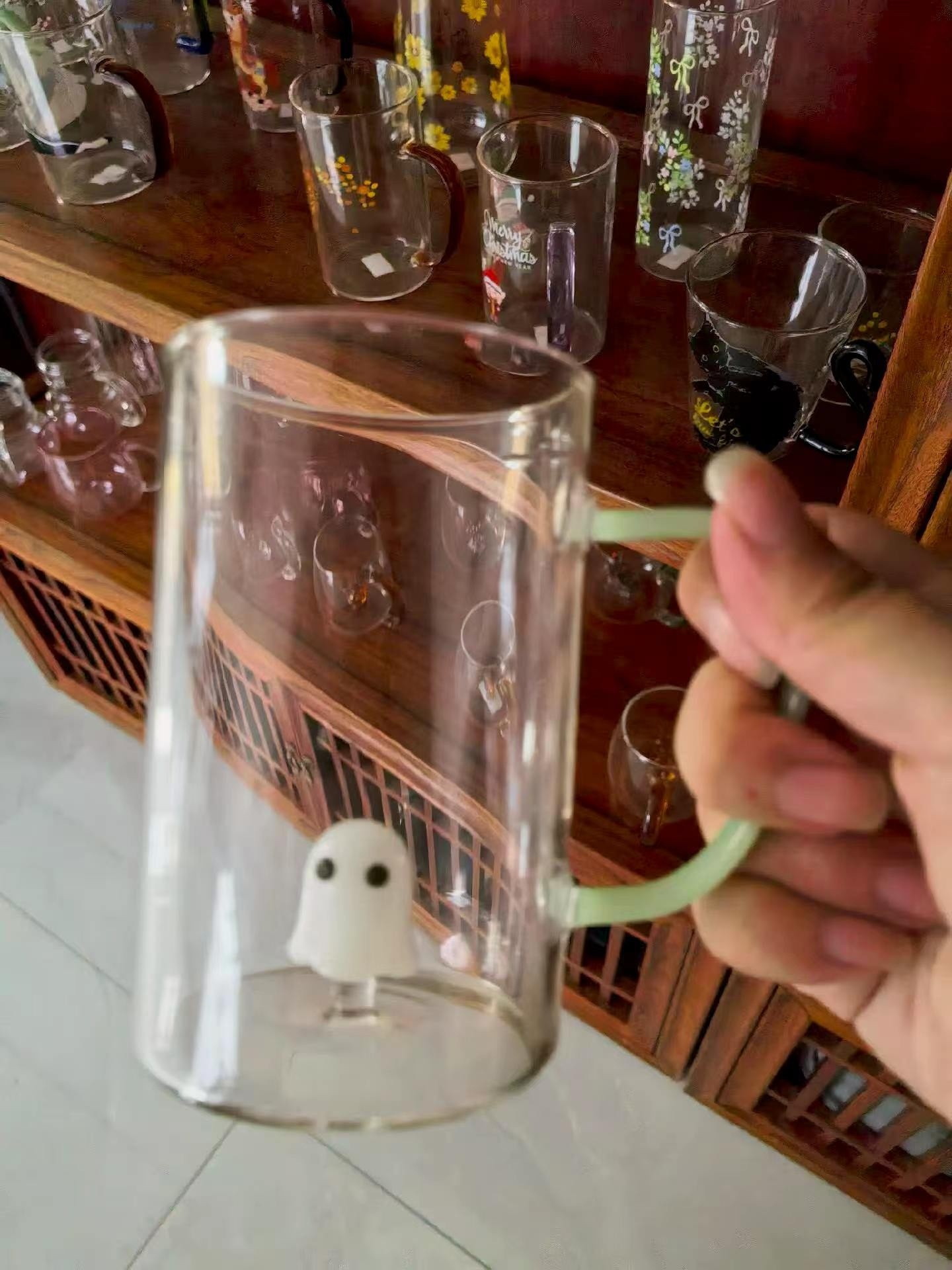
Fused figures are a decoration decision as much as a shape decision: the figure is placed during forming, so it becomes part of the piece instead of a decal that can wear. Seasonal programmes like these run on artwork approval first — send the character, we sample the placement, and production starts once the sample is signed off. Print, spray color and electroplating remain available on the same bodies for brands that prefer a flat logo.
How Borosilicate Glass Is Formed and Annealed
Both materials start as a gather of molten glass shaped by hand or machine — the technique is the one described under borosilicate glass, whose low expansion rate is why a borosilicate glass mug tolerates a hot pour into a cold body far better than everyday soda-lime glass. Forming is only half the job: every piece then moves through annealing, a slow cool that releases internal stress so nothing cracks in the carton or in the customer’s hands.
Crystal glass follows the same rhythm with a different emphasis — clarity and wall consistency, since the buyer is paying for how the piece reads under light. Mixed production weeks are normal here: a borosilicate glass run and a crystal glass run can share the same annealing schedule and the same inspection bench, which is what keeps a combined order on one timeline.
QC Notes for Borosilicate Glass and Crystal Glass Orders
Inspection is rim to base under bright light: no cracks or deep scratches, rims even, handles square, figures standing straight inside the body. Heights and capacities are checked against a steel rule and a measure on the bench, and decoration is checked for clean edges — a decal that has drifted or a spray line that has crawled is pulled before packing, not argued about after delivery.
Two material-specific checks matter for buyers. For borosilicate glass, we look at wall thickness around the fused figure and at the handle join, since those are the two places a mug gets stressed in use. For crystal glass, we look at clarity and surface polish, because a fingerprint-level haze or a dull band shows immediately on a retail shelf. Photos of the approved sample stay with the order, so mass production is checked against what you signed.
Packing: From the Bench to the Export Pallet
Every piece is individually wrapped, set into an inner box or a foam sleeve depending on the finish, then into a five-ply export carton with dividers. Printed cartons carry the usual handling marks — fragile, keep dry, this way up — and the outer label matches your packing list, so warehouse staff can check a carton without opening it.
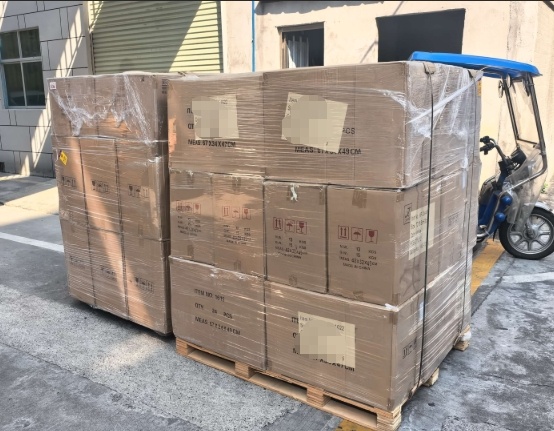
The pallet above is the last step before the truck: cartons stacked square, wrapped in stretch film so nothing shifts, then moved to the loading yard. Mixed orders consolidate the same way — crystal glass drinkware, borosilicate glass mugs and a run of charger plates can share one pallet plan and one container booking, which is usually where the freight saving comes from.
Spec Sheet
| Product | Borosilicate glass mugs and crystal glass tumblers (ribbed, slim, fused-figure styles) |
| Usage | Bars, cafés, hotels, gift and seasonal programmes, retail and wholesale |
| Material | Borosilicate glass / crystal glass — model dependent, please confirm |
| Craft | Machine-made and handmade, model dependent |
| Surface finish | Clear / solid color / spray / electroplating / decal / gold rim / fused figure |
| Packing | Inner box or foam sleeve, kraft or color box, into five-ply export carton |
| MOQ | Stock styles: full case; custom designs: per design — confirm with your quote |
| Decoration | Fused figures, fired decals, printed logos, spray color, plating |
MOQ, Lead Times and Decoration
Stocked styles ship by the case, which is the fastest route when a programme needs volume this quarter. Custom designs — your silhouette, your character, your print — are quoted per design, with artwork approval and a sample step ahead of the production window. Tell us the target ship date first and we will say honestly whether stock or custom is the right call.
Decoration options sit on both materials: fired decals and printed logos for brand work, spray color and electroplating for gift aisles, gold rim lines for table service, and fused figures for the novelty programmes that sell in Q4. Color matching runs on your PMS reference with approved sample pieces before mass production, so the run you receive matches the sample you signed.
Frequently Asked Questions
A: Stocked models ship by the case; custom fused-figure or printed designs are quoted per design for your model mix.
A: Yes — mixed orders are routine: one PO, both materials, consolidated pallets and a single container booking.
A: No — the figure is placed during forming and becomes part of the body, so there is no print to scratch or fade.
A: Each piece is wrapped, set into an inner box or foam sleeve, then packed into a five-ply export carton with dividers.
Browse current drinkware shapes in the drinkware collection, see how crystal glass is handled on the line in our handmade glass drinkware report, or open a crystal glass wine glass listing for a reference specification.
Send Us a Photo or a Drawing
Know the shape you need, or just know the shelf it has to sit on? Send a reference photo with your quantity, material preference and packing choice, and we come back with a quote, a sample plan and an honest lead time — for borosilicate glass, crystal glass, or both on the same purchase order.
Borosilicate Glass FAQ
Why choose borosilicate glass over crystal glass for hot drinks? Borosilicate glass handles sudden temperature change better, which is why it is the usual pick for mugs in hot service.
Where does crystal glass work better? In tumblers and gift sets where clarity, wall thinness and hand weight do the selling on the shelf.
Can I mix borosilicate glass and crystal glass in one container? Yes — mixed material orders are quoted together and packed on shared pallets to keep freight simple.
How do I start a borosilicate glass order? Send a photo or drawing with your quantity and target date, and we reply with pricing, packing options and a sample plan.